

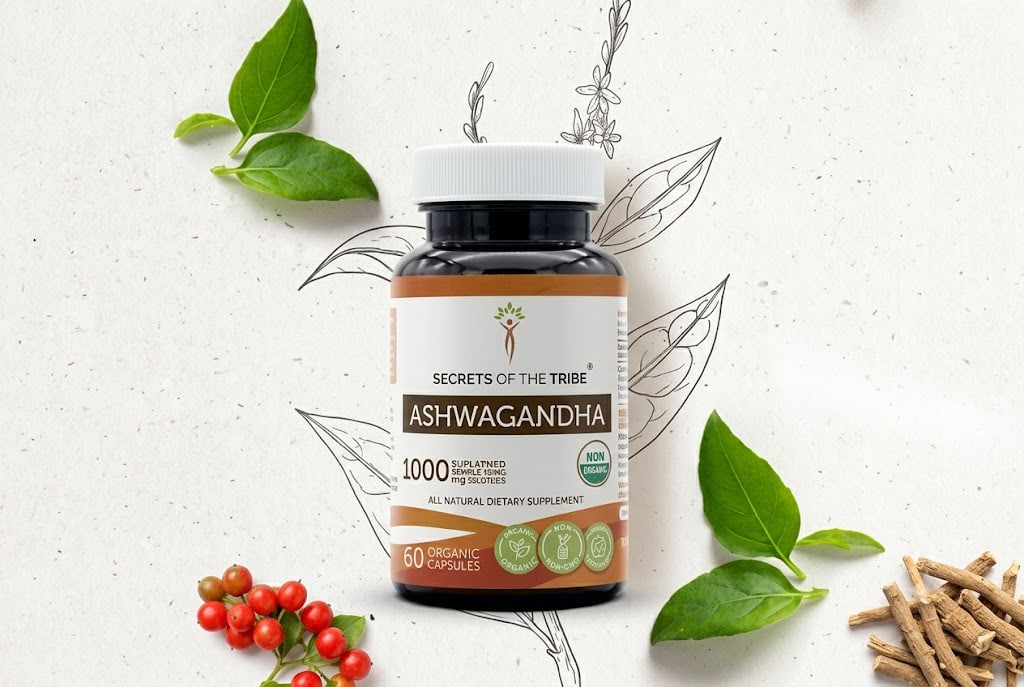
Ashwagandha vs Magnesium Glycinate is not a comparison between two versions of the same ingredient. Ashwagandha is a botanical supplement made from Withania somnifera. Magnesium glycinate is a mineral compound that combines magnesium with the amino acid glycine. This guide explains how their labels, evidence, serving information, interactions, and safety considerations differ.
Both products often appear in evening routines, but that placement does not make them interchangeable. Neither format automatically belongs in every bedtime routine. The useful question is not which one is universally better. It is whether a specific product matches your reason for considering it, your medications, and your individual response.
What is the short answer?

Ashwagandha and magnesium glycinate belong to different supplement categories. Ashwagandha products are usually evaluated by botanical identity, plant part, extract type, and withanolide standardization. Magnesium products are evaluated by the chemical form and the amount of elemental magnesium per serving.
Research on ashwagandha has focused mainly on stress, sleep, and related measures. Magnesium is an essential nutrient with established roles throughout the body, but evidence for magnesium supplements as general sleep products remains limited. Research on one ingredient cannot establish what the other ingredient will do.
| Comparison point | Ashwagandha | Magnesium glycinate |
|---|---|---|
| Ingredient type | Botanical extract or powder | Mineral bound to glycine |
| Identity to confirm | Withania somnifera, plant part, extract | Magnesium form and elemental magnesium |
| Common label units | Extract weight and sometimes withanolide percentage | Milligrams of elemental magnesium |
| Common adverse effects | Stomach upset, loose stools, nausea, drowsiness | Diarrhea, nausea, abdominal cramping |
| Major caution areas | Pregnancy, thyroid issues, liver concerns, sedating medicines | Kidney impairment and certain medication schedules |
| Direct comparison evidence | Reliable head-to-head evidence is lacking | |
What exactly are you comparing?
Ashwagandha is a variable botanical ingredient
Ashwagandha supplements can contain root powder, root extract, or a root-and-leaf extract. These materials do not have identical chemical profiles. Products may also use different extraction methods and withanolide concentrations. A study of one standardized extract does not automatically apply to every capsule, gummy, powder, or tincture bearing the ashwagandha name.
The scientific name matters because common names can be imprecise. Look for Withania somnifera and the plant part on the label. If the product lists a standardized extract, check whether it states the amount or percentage of withanolides.
Magnesium glycinate is a mineral compound
Magnesium glycinate is magnesium associated with glycine. Some labels use the term magnesium bisglycinate. Product specifications can still differ, so the ingredient name alone does not reveal the complete formulation.
The Supplement Facts panel should state the amount of elemental magnesium. This is the magnesium quantity used when comparing servings. It is not the total weight of the magnesium-glycine compound. A large compound weight can therefore represent a much smaller amount of elemental magnesium.
What does the evidence say about evening use?
Small clinical trials suggest that certain ashwagandha preparations may modestly affect some sleep measurements. The research has used different plant parts, extract strengths, daily amounts, and study populations. Results have tended to be more noticeable among participants with existing sleep difficulties. These findings do not establish a standard bedtime serving for all ashwagandha products.
Research on supplemental magnesium and sleep is also limited. One systematic review identified only three randomized trials involving 151 older adults with insomnia. The reviewers rated the supporting evidence as low or very low quality. Those findings should not be generalized to every age group or interpreted as proof specifically for magnesium glycinate.
No strong direct evidence shows that ashwagandha is better than magnesium glycinate, or that magnesium glycinate is better than ashwagandha, for an evening routine. Marketing descriptions such as calming, nighttime, or relaxation support do not replace product-specific evidence.
Two numbers that need context
350 mg: The U.S. adult upper limit applies to magnesium obtained from supplements and medications. It does not include magnesium naturally present in food, and it is not a suggested daily target.
About 3 months: Ashwagandha has generally been well tolerated in short studies lasting up to this period. Evidence about continuous use over many months or years remains insufficient.
How should you compare the labels?
Read the ashwagandha identity
Confirm the botanical name, plant part, serving size, extract ratio, and withanolide information. Do not compare two products only by the milligrams printed on the front. A concentrated extract and plain root powder can have the same listed weight while representing different preparations.
Find the elemental magnesium amount
Use the elemental magnesium value in the Supplement Facts panel. Then check the serving size. A label may list the amount per capsule even when the suggested serving contains two or more capsules. Include magnesium from other supplements, antacids, or laxatives when reviewing your total supplemental intake.
Check the complete formula
Look for added herbs, melatonin, vitamins, sweeteners, caffeine, or piperine. These ingredients can change the comparison. A multi-ingredient nighttime blend cannot be evaluated as though it contains only ashwagandha or magnesium glycinate.
Can ashwagandha and magnesium glycinate be used together?
There is no universal rule that these ingredients must be separated or combined. Research on the specific combination is limited. Personal factors such as kidney function, thyroid status, pregnancy, digestive sensitivity, and medication use matter more than a generic pairing chart.
Starting multiple products at once also makes interpretation difficult. If fatigue, stomach discomfort, loose stools, or unusual drowsiness appears, you may not know which product contributed. When a qualified professional considers both appropriate, introducing one change at a time can make the routine easier to evaluate.
Does either supplement have to be taken at bedtime?
No universal bedtime rule applies. Study schedules and product directions vary. Some people notice drowsiness with ashwagandha, while others do not. Magnesium timing may depend on digestive comfort and separation from certain medications. Follow the specific label and any instructions from your pharmacist or clinician.
Ashwagandha and Alcohol
Alcohol can blur the signals you would use to judge an evening supplement. It may change sleep patterns, alertness, coordination, and next-morning perception. Ashwagandha may also cause drowsiness in some people, but direct research on combining it with alcohol is sparse. A universal safe amount or waiting period cannot be inferred from current evidence.
Magnesium glycinate is not a countermeasure for alcohol-related sleep disruption. Regular heavy alcohol intake can also affect nutritional status, including magnesium status, but that does not justify self-directed high-dose supplementation. People with liver concerns, kidney impairment, or ongoing alcohol-related health issues should discuss supplement use with a qualified professional.
Who should seek professional guidance first?
Ashwagandha should be avoided during pregnancy and breastfeeding. Professional review is also important for people with thyroid or autoimmune conditions, upcoming surgery, liver concerns, or hormone-sensitive prostate cancer. Possible medication interactions include sedatives, anticonvulsants, thyroid hormone, immunosuppressants, and medicines that affect blood pressure or blood glucose.
Magnesium requires extra caution when kidney function is impaired because the kidneys remove excess magnesium. Magnesium supplements can interfere with the absorption of oral bisphosphonates and certain tetracycline or quinolone antibiotics. A pharmacist can provide medication-specific spacing instructions.
Evening Supplement Comparison Checklist
Use this checklist before choosing between ashwagandha and magnesium glycinate. It focuses on product identity and practical fit, not promises printed on the front label.
Define your reason
Write down what you want to evaluate. Avoid treating a broad phrase such as evening support as a measurable goal.
Confirm the ingredient
For ashwagandha, verify Withania somnifera and the plant part. For magnesium, confirm the form and elemental magnesium per serving.
Read the full serving
Check the number of capsules, tablets, scoops, or droppers in one serving. Do not compare products using front-label milligrams alone.
Review medicines and conditions
Check for kidney, thyroid, liver, autoimmune, pregnancy, and medication considerations. Ask a pharmacist when timing could affect medicine absorption.
Change one variable
If professional guidance supports use, avoid starting several new evening products together. Track digestive effects, drowsiness, sleep timing, and next-day alertness.
Reassess the routine
Stop and seek guidance if you notice a concerning reaction. Do not continue indefinitely simply because a supplement is plant-based or mineral-based.
FAQ
Is ashwagandha the same as magnesium glycinate?
No. Ashwagandha is a botanical ingredient from Withania somnifera. Magnesium glycinate is a compound containing the essential mineral magnesium and glycine.
Which is better for an evening routine?
Neither is universally better. The appropriate comparison depends on the product, intended use, medications, health conditions, and individual response.
Does magnesium glycinate always improve sleep?
No. Research on magnesium supplements and sleep is limited, and much of it does not specifically study magnesium glycinate.
Does ashwagandha work immediately?
Current studies do not support assuming an immediate, predictable response. Trials have generally assessed regular use over several weeks with specific extracts.
Can I take ashwagandha and magnesium glycinate together?
Some people may use both, but evidence on the combination is limited. A clinician or pharmacist should review medications, kidney function, thyroid status, and other relevant factors.
What is elemental magnesium?
Elemental magnesium is the actual amount of magnesium supplied by a compound. It is the number to use when comparing magnesium servings.
Is magnesium from food included in the 350 mg upper limit?
No. The U.S. adult upper limit of 350 mg applies to magnesium from supplements and medications, not magnesium naturally found in food.
Can ashwagandha be mixed with alcohol?
Direct interaction data are limited, so a universal safe amount or timing interval is not established. Alcohol can also make drowsiness and sleep changes harder to interpret.
Glossary
Adaptogen
A loosely defined term used for substances promoted in relation to the body’s response to stress. It is not a precise product specification.
Botanical extract
A preparation produced by removing selected constituents from plant material with a suitable extraction process.
Chelate
A structure in which a mineral is associated with an organic molecule, such as an amino acid.
Elemental magnesium
The amount of magnesium itself in a serving, excluding the weight of its attached compound.
Plant part
The portion of a botanical used in a product, such as the root, leaf, or both.
Standardized extract
An extract manufactured to provide a stated level of one or more marker compounds.
Upper limit
The maximum daily intake unlikely to pose adverse effects for most people in a defined population.
Withanolides
A group of naturally occurring compounds found in ashwagandha and sometimes listed as standardization markers.
Conclusion
Ashwagandha and magnesium glycinate differ in identity, label units, evidence, and safety considerations. Compare the exact products and your personal risk factors before deciding whether either fits an evening routine.
Sources Used
- Ashwagandha research, formulation, and safety overview, NIH Office of Dietary Supplements fact sheet – ods.od.nih.gov/factsheets/Ashwagandha-HealthProfessional
- Ashwagandha safety and medication interaction guidance, National Center for Complementary and Integrative Health – nccih.nih.gov/health/ashwagandha
- Magnesium labeling, upper limits, adverse effects, and interactions, NIH Office of Dietary Supplements fact sheet – ods.od.nih.gov/factsheets/Magnesium-HealthProfessional
- Systematic review of oral magnesium supplementation and insomnia in older adults, PubMed – pubmed.ncbi.nlm.nih.gov/33865376
- General guidance on alcohol-related interactions and drowsiness, National Institute on Alcohol Abuse and Alcoholism – niaaa.nih.gov/publications/brochures-and-fact-sheets/harmful-interactions-mixing-alcohol-with-medicines